

Digital transformation in nonprofits has moved from being a forward-looking aspiration to a present-day necessity. According to Salesforce’s 2024 Nonprofit Digital Transformation report, over 90% of nonprofit leaders believe their digital experience does not fully meet stakeholder expectations. At the same time, U.S. nonprofits invest between 7% and 15% of annual revenue into digital initiatives. Yet many organizations struggle to translate this investment into measurable operational or mission impact.
Why Nonprofit Digital Transformation Often Slows Down
Nonprofits do not begin digital transformation from identical starting points. Most nonprofit technology leaders face a combination of aging infrastructure, siloed data, manual processes and governance gaps. When digital transformation is treated as a universal roadmap rather than a contextual journey, initiatives stall and systems become increasingly fragmented.
Understanding your nonprofit’s unique transformation pathway helps prevent misaligned investments and accelerates measurable progress. Based on experience of working with varied nonprofits and membership organizations.
The 4 Pathways of Digital Transformation
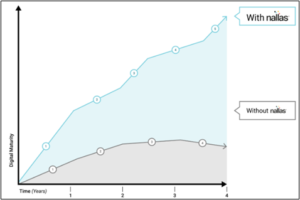
Every nonprofit’s digital trajectory is shaped by three variables: the condition of legacy systems, the level of accumulated technical debt, and the organization’s strategic ambition. Together, these factors typically result in one of four pathways.
1)Legacy Curve with Technical Debt
In this pathway, core platforms are outdated and tightly coupled. Integrations are fragile, reporting is reactive and manual workarounds dominate operations. Scaling new capabilities becomes difficult because the foundation cannot support them.
Here, priority is foundational remediation before acceleration. Deploying advanced analytics, automation, or AI without stabilizing core systems often increases complexity rather than reducing it.
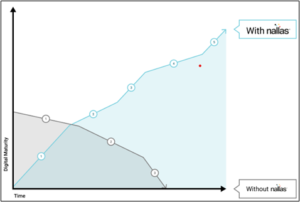
2)Legacy Curve without Technical Debt
Some nonprofits operate on older systems that are not deeply entangled. Architecture may be dated but relatively clean. This creates a leapfrog opportunity.
The priority is structured modernization to avoid incremental stagnation. With deliberate sequencing, these organizations can migrate to cloud-based platforms, unify data environments and embed automation without extensive rework.
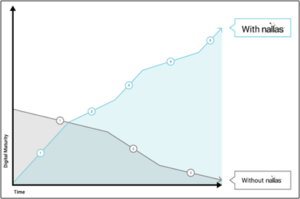
3)Traditional Curve with Technical Debt
In this pathway, digital initiatives are already in motion. CRM upgrades, marketing automation tools or cloud migrations may be underway. However, unresolved technical debt continues to limit agility.
Parallel systems, data duplication and lagging governance systems reveal foundational inefficiencies, although there is progress. The priority is strengthening architecture before scaling further innovation.
4)Traditional Curve without Technical Debt
Organizations in this pathway operate with relatively modern systems and disciplined governance. Their challenge is no longer remediation, but acceleration.
They are positioned to scale AI responsibly, implement predictive analytics, automate workflows, and personalize engagement. The priority is moving from operational efficiency to intelligent, data-driven growth to sustain the momentum.
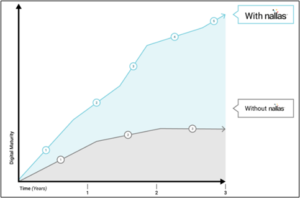
Why Pathway Identification Matters
Digitally mature nonprofits consistently demonstrate stronger operational efficiency and stakeholder engagement. However, maturity is not defined by tool adoption alone. It is a function of how all the tools interact with each other in symphony to improve experience for your members and efficiency from within.
Each pathway demands a distinct strategy. Clarity about your starting point enables disciplined resource allocation and prevents costly detours. Digital transformation becomes predictable when the choice of the ideal pathway is clear.
Embarking on the Nonprofit Digital Maturity Journey
Begin with an honest assessment of legacy systems and technical debt. Align digital initiatives directly with mission objectives and board-level metrics. Sequence modernization so that core systems and data governance mature before scaling AI and automation. Embed performance measurement at every stage to maintain leadership confidence and transparency.
Conclusion
Nonprofits do not need more experimentation. They need clarity, sequencing and disciplined execution. Understanding your digital transformation pathway is the first step toward achieving sustainable, measurable nonprofit digital maturity.
FAQs
1) What is digital transformation in nonprofits?
Digital transformation in nonprofits refers to the strategic modernization of technology, data, operations, and governance to improve mission delivery, stakeholder engagement, and operational efficiency. It goes beyond adopting new tools and focuses on aligning digital capabilities with organizational strategy and measurable outcomes.
2)Why do nonprofit digital transformation initiatives often fail?
Nonprofit digital transformation efforts typically stall due to legacy systems, technical debt, siloed data, lack of governance, and misalignment between digital initiatives and strategic priorities. Without sequencing modernization correctly, organizations risk layering new technologies onto unstable foundations.
3) What is nonprofit digital maturity?
Nonprofit digital maturity describes an organization’s ability to use technology, data, automation, and governance in a coordinated way to deliver measurable impact. Mature nonprofits integrate systems effectively, embed data governance, and align digital initiatives directly to mission objectives.
4) What are the 4 pathways of digital transformation in nonprofits?
The four pathways are:
- Legacy Curve with Technical Debt – Outdated and tightly coupled systems require foundational remediation.
- Legacy Curve without Technical Debt – Older but relatively clean systems create leapfrog modernization opportunities.
- Traditional Curve with Technical Debt – Modernization is underway but constrained by unresolved system inefficiencies.
- Traditional Curve without Technical Debt – Modern architecture enables acceleration through AI, analytics, and automation.
5) How can nonprofits identify their digital transformation pathway?
Nonprofits can identify their pathway by assessing:
- The age and integration quality of core systems
- The presence and impact of technical debt
- Data architecture maturity
- Governance and compliance readiness
- Alignment between digital initiatives and strategic goals
An honest evaluation of these variables reveals the most appropriate transformation path.
6) What is technical debt and what role does technical debt play in nonprofit digital transformation?
Technical debt refers to accumulated system inefficiencies, outdated integrations, and architectural shortcuts that limit agility. In nonprofits, unresolved technical debt slows modernization, increases maintenance costs, and restricts AI or automation scalability. Addressing technical debt early enables faster and more sustainable digital maturity.
7) How should nonprofits sequence digital transformation initiatives?
Effective sequencing typically follows this progression:
- Stabilize or modernize core systems
- Unify and govern data architecture
- Align digital initiatives with strategic KPIs
- Embed automation and AI responsibly
- Measure ROI continuously
Attempting advanced capabilities before strengthening foundational systems often increases complexity.
8) How can AI support nonprofit digital transformation?
AI in nonprofits can enhance personalization, automate workflows, improve predictive analytics, and strengthen decision-making. However, AI must be introduced after data governance and system integration maturity are achieved to avoid compliance risks and fragmented execution.
9)What are the benefits of improving nonprofit digital maturity?
Improved nonprofit digital maturity can lead to:
- Higher stakeholder engagement
- Increased operational efficiency
- Faster decision-making
- Improved data-driven governance
- Better allocation of limited resources
- Scalable AI and automation initiatives
Digital maturity strengthens both internal efficiency and external impact.
10) What is the first step in accelerating nonprofit digital transformation?
The first step is clarity. Nonprofits should assess their current systems, identify technical debt, evaluate governance readiness, and determine which transformation pathway they are on. Clear pathway identification enables disciplined execution and measurable progress.

Jerry Papadatos
Director - Sales

Giridhar Gopal Warrier
Lead – Strategy